What our Summer 2026 intern class took away from a candid conversation with BMS Chief Research Officer Robert Plenge — on career uncertainty, first principles, and learning to hold your ‘why’ tightly and your ‘how’ loosely.
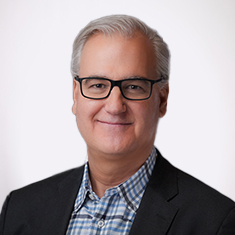
Robert Plenge was a basketball-obsessed teenager with a plan: play through injuries, study hard, become an orthopedic surgeon. It was a good plan. And then a single research fellowship year arrived and, as he put it, “totally changed my life.”
That pivot – from confident plan to complete redirection – became the through line of this summer’s Fireside Chat between BMS Executive Vice President and Chief Research Officer Dr. Robert Plenge and our Summer 2026 intern and co-op class. What unfolded wasn’t a highlight reel. It was something rarer: an accomplished scientific leader speaking honestly about how uncertain even the most impressive careers feel from the inside.
“There is no control experiment in life.”
After that fellowship redirected him toward basic science, Robert’s path moved through UC San Diego, medical school, a decade in academic medicine at the Broad Institute and Brigham and Women’s Hospital, and eventually into industry — Merck, then Celgene, then BMS through the 2019 acquisition. At every fork in the road, he said he returned to the same tool: first principles.
“There is no control experiment in life. You’re going to have to make the choice. And that choice comes with incomplete information…that’s why going back to first principles to say, look, this is what I believe in. I’m going to go for it.”
For a room full of STEM-focused students trained to wait for evidence before drawing conclusions, that reframe hit differently.
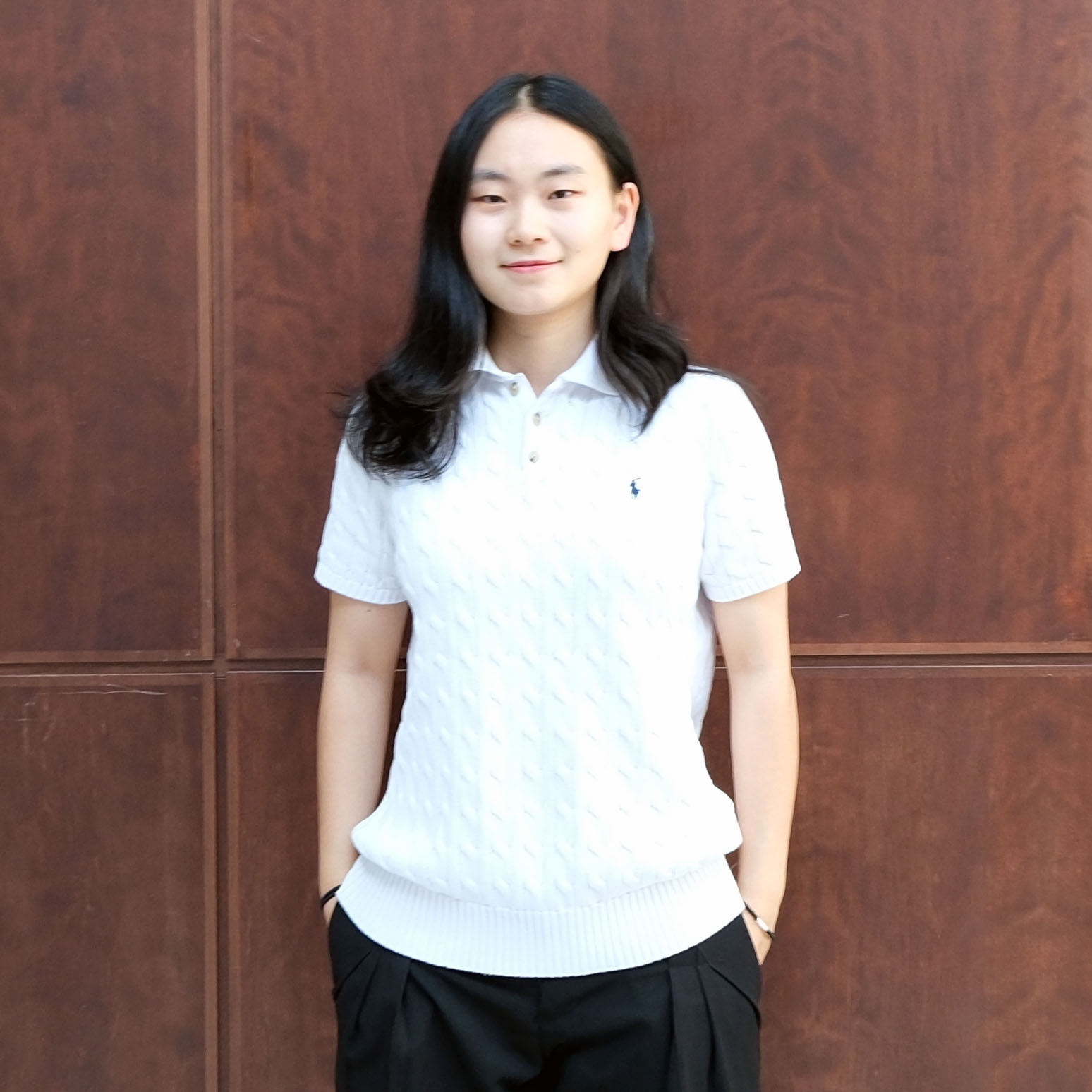
“Robert’s point was that career decisions never reach that level of evidence, and waiting is also a decision… So for me, the question changed from ‘is this the right path?’ to ‘will this path teach me something I cannot learn where I am now?’”
– Peiyu Liu, Hematology & Cell Therapy, Data and Quantitative Sciences
Hold your ‘why’ tightly. Hold your ‘how’ loosely.
That framework became the afternoon’s sharpest takeaway: Your ‘why’ is your conviction – the thing you don’t compromise. Your ‘how’ is flexible. You might pursue it in academia, in industry, in government, or at BMS. The destination stays. The route can change.
For interns like Angelin James, a Statistical Programming Intern, that distinction unlocked something. Her ‘why’ – contributing to better patient care and advancing science that makes a real difference – hadn’t shifted. What changed over the summer was her understanding of the ‘how’: that data, programming, and clinical research were all valid roads to the same place she’d always wanted to go.
That openness showed up differently for others. Jessica Boules, a Clinical Research Pharmacist Intern, came to BMS searching for the perfect path. However, she left the fireside chat with the realization that the search itself was the wrong frame – that staying grounded in purpose while staying flexible about direction wasn’t a compromise. It was the strategy. Every project, every conversation, pointed somewhere she hadn’t previously thought to look.
The one trait to always come back to
What does it take to stay open to flexibility when the path isn’t clear? Robert’s answer was immediate: curiosity. Not as a buzzword, but as a practice. Curiosity kept him in the lab, pulled him across the country, and now has him thinking seriously about AI at the frontier of drug discovery.
He was honest about the shadow side too. Curiosity without execution is just a distraction. The real skill is knowing when to explore and when to deliver — and he admitted, without defensiveness, that he’s still working on that balance himself.
On AI, he said the quiet part out loud: “The short answer is I have no idea. And I also don’t think anyone has any idea.” For a room full of interns wondering what their careers look like in ten years, that honesty hit harder than any prediction would have. But his advice was clear: stay curious, learn the tools, and stay flexible.
The difference between a good mentor and a great one
Perhaps the most personal thread of the conversation was mentorship. Robert encouraged BMS interns to invest now in the relationships they’re building – today’s colleagues become tomorrow’s support structure in ways you can’t anticipate.
But he drew a sharp, important line between two kinds of mentors: the ones who give advice for you, and the ones who simply tell you what they would have done.
“The really good mentors, they try to listen to the question that you’re asking…they try to give you advice for you.”
It’s a distinction that sounds simple. In practice, it’s rare – and worth paying attention to as you start building your own network.
Careers rarely unfold the way you plan
The interns who walked out of that room didn’t leave with a five-step roadmap. They left with something more durable: a clear sense that conviction and flexibility aren’t opposites — and that every unexpected turn, handled with purpose, becomes an opportunity.

“What excites me most is the possibility that one day, somewhere, someone will smile because of work I was part of… I want to spend my career helping push that door open, one well-designed trial at a time. That is not ambition for me. That is purpose.”
– Joshua Korley, Cardiovascular & Neuroscience Biostatistics, Data and Quantitative Sciences
Hold your ‘why’ tightly. Hold your ‘how’ loosely. The rest has a way of working itself out.